Новости
Дом / Новости / Новости отрасли / Для чего используются термостойкие перчатки из алюминиевой фольги?




Термостойкие перчатки из алюминиевой фольги представляют собой специально разработанные средства индивидуальной защиты (СИЗ), предназначенные для защиты рук рабочих от сильного теплового излучения, прямого контакта с горячими поверхностями и брызг расплавленного металла. Они используются на литейных заводах, в литейных производствах, производстве стекла, обслуживании промышленных печей, сварочных работах и на любом рабочем месте, где температура обычно превышает 200°C (392°F). Комбинируя внешний слой алюминиевой фольги с высокой отражающей способностью и теплоизоляционные внутренние материалы — обычно арамидное волокно или стекловолокно — эти защитные перчатки от высоких температур отражают до 95% лучистого тепла, значительно уменьшая тепловую энергию, попадающую на руку. Для промышленных покупателей, менеджеров по безопасности и специалистов по закупкам: понимание конструкции, данных о производительности и правильное применение теплоизоляционные перчатки промышленные Класс важен как для безопасности работников, так и для соблюдения нормативных требований.
The protective performance of тепловые перчатки с алюминиевым покрытием возникает из трех различных функциональных слоев, работающих вместе. Внешний слой представляет собой металлизированную алюминиевую фольгу или алюминизированную ткань, которая действует как зеркало излучающего тепла. According to ASTM F2412 and EN 407 testing protocols, polished aluminum surfaces reflect between 90% and 95% of infrared radiation, making it one of the most efficient radiant-heat barriers available at moderate cost.
Под отражающим слоем находится теплоизоляционный сердечник, обычно изготовленный из войлока из стекловолокна с высоким содержанием кремнезема, арамидного (параарамидного) трикотажа или их комбинации. Этот слой препятствует кондуктивной теплопередаче — прямому потоку тепла от горячего объекта в материал перчатки. Внутренняя подкладка, часто из хлопчатобумажной махры или арамидного трикотажа, обеспечивает комфорт, впитывание влаги и последний барьер от остаточного тепла. Комбинированная сэндвич-структура дает светоотражающие теплозащитные перчатки их двойная способность: отражать лучистую энергию и блокировать проводимое тепло.
Рисунок 1: Изометрический разрез термостойкой перчатки из алюминиевой фольги, показывающий трехслойную конструкцию. Внешняя алюминизированная фольга отражает до 95% инфракрасного излучения, средняя изоляционная сердцевина (арамид или стекловолокно) блокирует проводимую теплопередачу, а внутренняя хлопковая или махровая подкладка из арамида обеспечивает комфорт и отводит влагу. Understanding this layered architecture helps buyers select the correct glove specification for their thermal hazard level.
Теплоотражающие перчатки с конструкцией из алюминиевой фольги используются везде, где рабочие сталкиваются с длительным или интенсивным воздействием лучистого тепла. Следующие отрасли представляют собой основные варианты использования, каждая из которых предъявляет особые требования к температуре и маневренности.
Рисунок 2: Горизонтальная гистограмма, иллюстрирующая типичные пиковые рабочие температуры в ключевых отраслях, где требуются термостойкие перчатки из алюминиевой фольги. Производство стекла и литье металлов представляют собой наиболее суровые термические условия, температура которых регулярно превышает 900–1000 °C, что требует использования алюминизированных перчаток высочайшего качества с многослойной изоляцией. Операции в печах и ковка находятся в диапазоне 600–750°C, в то время как условия сварки, нефтехимического обслуживания и пищевой промышленности, хотя и менее экстремальные, все же требуют сертифицированной тепловой защиты. Правильный выбор перчаток для данного температурного диапазона предотвращает как недостаточную защиту, так и ненужный объем, который снижает производительность труда.
Сертификаты являются основой любого заслуживающего доверия защитные перчатки от высоких температур решение о закупке. Two primary international standards govern the testing and classification of thermal protective gloves: ЕН 407:2004/А1:2008 (европейский) и АНСИ/МСЭА 105 (North American). EN 407 определяет шесть уровней эффективности по шести термическим опасностям — воспламеняемость, контактное тепло, конвективное тепло, лучистое тепло, небольшие брызги расплавленного металла и большие брызги расплавленного металла.
Для термостойкие перчатки из алюминиевой фольги Критические рейтинги обычно составляют уровень 3–4 для конвективной термостойкости (время контакта до повышения на 10 °C при температуре 80 °C), уровень 3–4 для лучистого тепла (процент блокировки теплового потока) и уровень 3–4 для устойчивости к брызгам расплавленного металла. Покупатели должны убедиться, что протоколы испытаний поставщика соответствуют фактической предлагаемой модели перчаток, поскольку конструкция из алюминизированной ткани может значительно различаться у разных производителей.
| EN 407 Опасность | Уровень 1 | Уровень 2 | Уровень 3 | Уровень 4 | Typical Aluminized Rating |
|---|---|---|---|---|---|
| Воспламеняемость | послепламенное пламя ≤20 с | ≤10 с | ≤3 с. | Нет плавления/капания | 3–4 |
| Контактное тепло | 100°С / 15 с | 250°С / 15 с | 350°С / 15 с | 500°С/15с | 2–3 |
| Конвективное тепло | HTI ≥4 с. | ≥7 секунд | ≥10 с | ≥18s | 3–4 |
| Лучистое тепло | РХТИ ≥7 с | ≥20 с | ≥50 с | ≥95 с | 4 |
| Всплеск расплавленного металла | ≥30g | ≥60 г | ≥120 г | ≥200 г | 3–4 |
На следующих изображениях показан реальный продукт, произведенный компанией Nantong Qiji Glove Co., LTD. - тепловая перчатка с алюминиевым покрытием Сочетание полностью алюминизированной внешней оболочки с высокоэффективным внутренним трикотажем из параарамида. Отражающая серебряная поверхность обеспечивает основной лучистый тепловой барьер, а внутренняя арамидная подкладка теплого кремового оттенка видна на детальном снимке крупным планом, что подтверждает многослойную конструкцию, описанную выше.
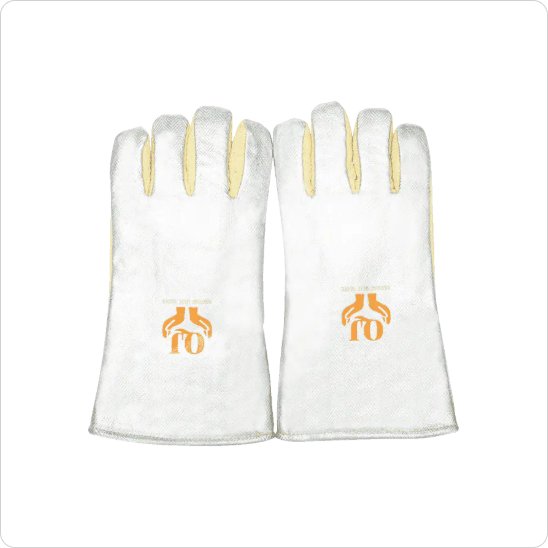
Термостойкие перчатки из алюминиевой фольги — full product view showing reflective outer shell and aramid palm reinforcement.
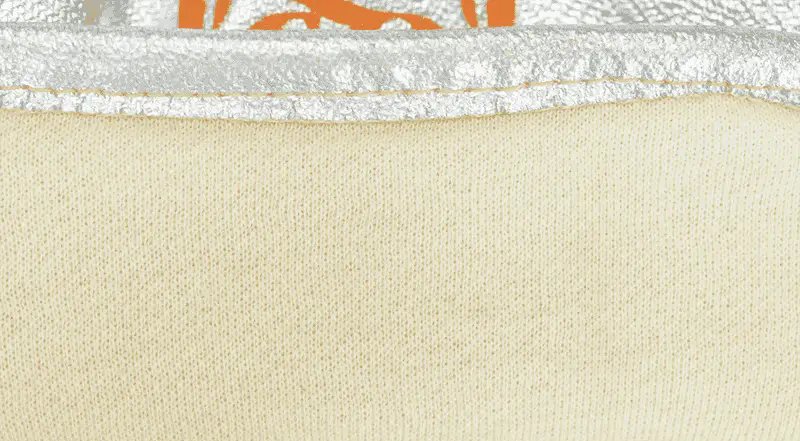
Close-up of the inner aramid knit lining adjacent to the aluminized outer layer, showing the dual-material construction.
Выбор правильных перчаток требует понимания того, как термостойкие перчатки из алюминиевой фольги сравнить с альтернативными технологиями теплозащиты. Четыре основные категории участников: кожаные рабочие перчатки, перчатки только из арамида, силиконовые перчатки для запекания и перчатки из композитного углеродного волокна. У каждого из них есть определенные компромиссы в производительности: отражение лучистого тепла, сопротивление контактному нагреву, маневренность, долговечность и стоимость.
Рисунок 3. Радарная диаграмма, сравнивающая термостойкие перчатки из алюминиевой фольги с кожаными и альтернативными перчатками, состоящими только из арамида, по пяти ключевым параметрам эффективности. Алюминированные перчатки явно доминируют в лучистом отражении тепла (его определяющее преимущество) и конкурентоспособны по долговечности и стоимости. Leather gloves score higher in dexterity and contact heat but offer minimal radiant heat protection, making them unsuitable for foundry and furnace environments. Перчатки, состоящие только из арамида, обеспечивают хорошую контактную термостойкость, но не имеют отражающего барьера, что делает алюминизированные перчатки незаменимыми при работе с высоким уровнем излучения. Эта радиолокационная визуализация помогает менеджерам по безопасности быстро определить, какой тип перчаток лучше всего соответствует их конкретному профилю опасности, а не полагаться на сравнения по одному показателю.
Один из наиболее важных и часто неправильно понимаемых аспектов теплоизоляционные перчатки промышленные производительность заключается в том, что защита не является бинарной. Он ухудшается со временем воздействия. Стандарт EN 407 измеряет индекс теплопередачи (HTI): время в секундах, прежде чем внутренняя поверхность перчатки поднимется на 10°С выше температуры окружающей среды при заданном тепловом потоке. Понимание того, как различные конструкции перчаток ведут себя с течением времени, позволяет менеджерам по безопасности устанавливать правильные циклы работы и отдыха и ограничения задач.
Figure 4: Line chart showing the rate of inner surface temperature rise for three glove types under identical 80 kW/m² convective heat flux (simulating close proximity to a furnace opening or molten metal pour). Термостойкая перчатка из алюминиевой фольги поддерживает температуру внутренней поверхности значительно ниже порога 10°C в течение более 90 секунд — более чем в четыре раза дольше, чем стандартная кожаная перчатка. Расширенное защитное окно – это не просто преимущество комфорта; в этом разница между благополучно выполненным заданием и термическим ожогом. Перчатки, состоящие только из арамида, работают достойно, но им не хватает слоя, отражающего излучение, что делает алюминизированные конструкции уникально подходящими для сред с высоким уровнем излучения. These curves illustrate why task duration is a critical input when specifying furnace gloves heat resistant for your operation.
Не все термостойкие перчатки из алюминиевой фольги построены одинаково. Такие производители, как Nantong Qiji Glove Co., LTD. предлагаем несколько конфигураций конструкции для удовлетворения конкретных промышленных требований. Четырьмя основными переменными являются: тип внешней фольги, материал изоляционной сердцевины, внутренняя подкладка и длина перчаток.
Стандартный термостойкие рабочие перчатки из алюминия выпускаются в трех категориях длины: до запястья (около 30 см), до локтя (45 см) и до плеч (60 см). Для операций, связанных с проникновением в печи или работой с большими ковшами с расплавленным металлом, обязательны коленчатые или плечевые варианты. Компания Nantong Qiji предлагает OEM-размеры по индивидуальному заказу, поддерживающие распределение размеров рук для промышленных рабочих.
Рисунок 5: Столбчатая диаграмма, иллюстрирующая три стандартных варианта длины перчаток для термостойких перчаток из алюминиевой фольги и степень защиты рук, которую они обеспечивают. Перчатки длиной до запястья (30 см) подходят для задач, требующих только защиты рук, например, при работе с предварительно охлажденными компонентами или кратковременными точками контакта. Варианты длиной до локтя (45 см) расширяют защиту до уровня предплечья, что важно для рабочих, которые залезают в печные камеры или работают с большими литейными формами. Перчатки длиной до плеч (60 см) обеспечивают наиболее полную защиту при разливке в литейных ковшах и производстве стекла, где вся рука подвергается интенсивному излучению тепла. Custom lengths are also available from Nantong Qiji Glove Co., LTD. для удовлетворения конкретных эргономических и технологических требований.
Даже самые результативные защитные перчатки от высоких температур выйдет из строя преждевременно без правильных протоколов технического обслуживания. OSHA 29 CFR 1910.138 и EN ISO 21420:2020 требуют от работодателей установления графиков проверок и замены тепловых СИЗ. The following practices are industry best standards (referenced from OSHA PPE guidelines and EN ISO 21420).
Для industrial buyers, procurement managers, and safety officers sourcing промышленные перчатки высокой температуры В целом следующий контрольный список помогает избежать распространенных ошибок в глобальной цепочке поставок СИЗ.
Наньтун Qiji Glove Co., LTD. was founded in 1988, making it one of China's longest-established specialist glove manufacturers with over 36 лет целенаправленного опыта в защитных рукавицах. Штаб-квартира компании находится в городе Ругао, провинция Цзянсу — месте, признанном во всем мире как город-долгожитель, с развитой инфраструктурой и удобным доступом к логистическим сетям Шанхая.
Объект охватывает 12 000 квадратных метров и нанимает от 168 до 200 квалифицированных рабочих. Годовой доход приближается к 100 миллионам юаней, чему способствует сильный банковский кредит и признание как выдающегося местного предприятия. Компания начинала как OEM-поставщик, накопив богатую клиентскую базу по всему миру, и с тех пор развила собственную исследовательскую, опытно-конструкторскую и производственную инфраструктуру. Product categories now span the full spectrum of leather work gloves including cut-resistant, anti-impact, устойчивый к высоким температурам , водонепроницаемые, маслостойкие, огнестойкие и морозостойкие варианты.
Производственный цех оснащен современным многофункциональным оборудованием: электрическими швейными машинами, гладильными машинами, цепными машинами, закрепочными машинами, вышивальными машинами. Придерживаясь принципов честности, ориентации на качество и превосходного обслуживания, Nantong Qiji экспортирует продукцию по всему миру и заслужила неизменное признание международных клиентов за первоклассное качество и внимательное обслуживание. The company welcomes wholesale inquiries, OEM partnerships, and custom development projects for термостойкие перчатки из алюминиевой фольги и полный ассортимент промышленных защитных перчаток.
В1: Какую температуру выдерживают термостойкие перчатки из алюминиевой фольги?
О: Температурный диапазон зависит от конструкции. Стандартные перчатки из алюминизированного стекловолокна рассчитаны на воздействие лучистого тепла при температуре примерно до 800°C при кратковременном воздействии. Варианты алюминизированного параарамида могут выдерживать постоянные источники лучистого тепла при температуре выше 1000°C. Контактная термостойкость (прямое прикосновение к поверхности) обычно оценивается в пределах 250–500°C согласно EN 407, уровни 2–4. Всегда проверяйте конкретный отчет об испытаниях для приобретаемой модели.
В2: Подходят ли термостойкие перчатки из алюминиевой фольги для сварки?
О: Да, особенно для сварочных сред с высокой мощностью лучистого тепла, таких как плазменная резка и сварка MIG/TIG в тяжелых условиях. Они особенно полезны, когда работникам необходимо манипулировать заготовками вблизи активных сварочных дуг. Для стандартной сварки MIG/TIG можно использовать традиционные кожаные сварочные перчатки с большей ловкостью для самого сварного шва, а алюминизированные перчатки обеспечивают защиту при работе с близлежащими компонентами.
В3: Можно ли использовать тепловые перчатки из алюминиевой фольги для работы с расплавленным металлом?
A: Aluminized gloves provide meaningful protection against small molten metal splashes (EN 407 Level 3–4 for molten metal splash). Однако для операций, связанных с прямым контактом с большими объемами расплавленного металла, например, при разливке в ковше, в составе комплексной системы СИЗ требуются перчатки до плеч с дополнительной защитой предплечий и лицевые щитки. Одних только перчаток недостаточно для защиты при полном погружении или в случае брызг большого объема.
В4: Как долго служат термостойкие перчатки из алюминиевой фольги?
О: Срок службы зависит от частоты и интенсивности использования. При умеренном промышленном использовании (ежедневная работа с компонентами при температуре до 300°C) качественная пара алюминизированных перчаток может прослужить 6–12 месяцев. В тяжелых литейных или литейных условиях с повторяющимся воздействием высоких температур обычно используются циклы замены продолжительностью 2–4 месяца. Regular visual inspection of the foil layer and seams is the most reliable way to determine when replacement is needed.
Вопрос 5: предлагает ли Nantong Qiji перчатки из алюминиевой фольги OEM и нестандартного размера?
А: Да. Наньтун Qiji Glove Co., LTD. имеет обширный опыт работы с OEM-производителями с 1988 года и поддерживает индивидуальные спецификации перчаток, включая нестандартные размеры, альтернативные материалы внутренней подкладки, увеличенную длину манжет и брендинг клиентов. Приветствуются оптовые запросы на термостойкие перчатки для литья металлов, печей и других высокотемпературных применений.
Вопрос 6: На какие сертификаты следует обратить внимание при покупке защитных перчаток при высоких температурах?
О: Для европейских рынков основным стандартом является EN 407:2004/A1:2008, охватывающий шесть уровней термической опасности. For North American markets, ANSI/ISEA 105 applies. Убедитесь, что отчеты об испытаниях исходят от аккредитованных сторонних лабораторий, таких как SGS, TUV или Intertek, и что они относятся к конкретной модели перчаток, а не к общему семейству. ISO 21420:2020 также применим к основным требованиям к перчаткам, включая эргономику и комфорт.
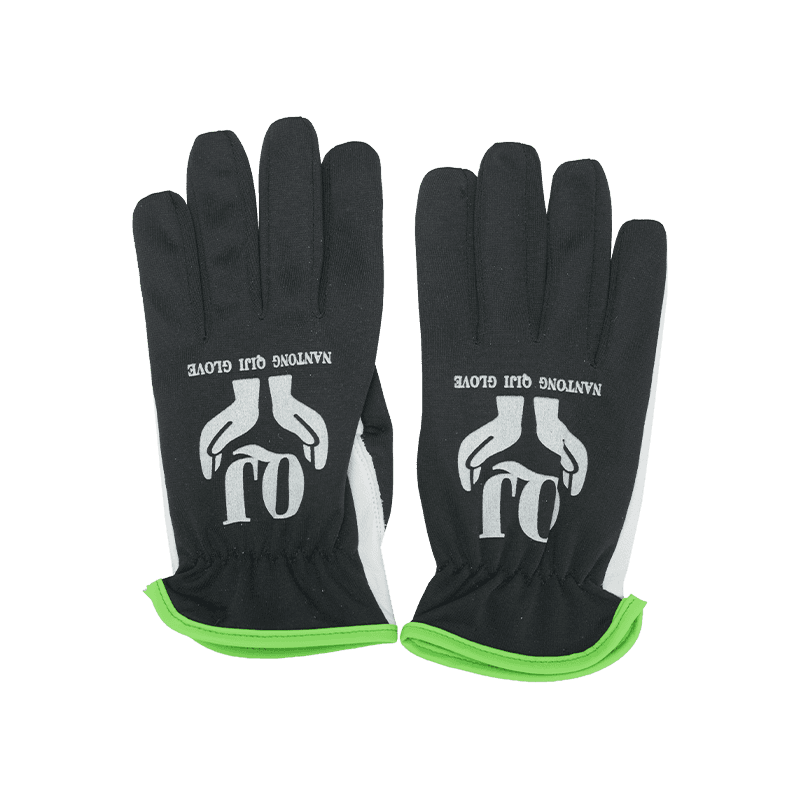
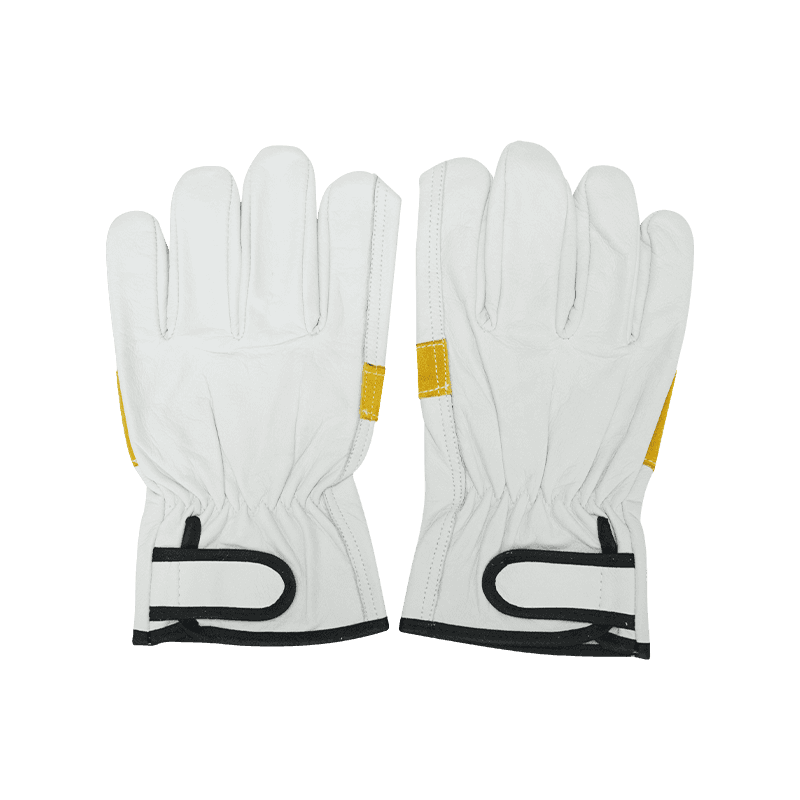
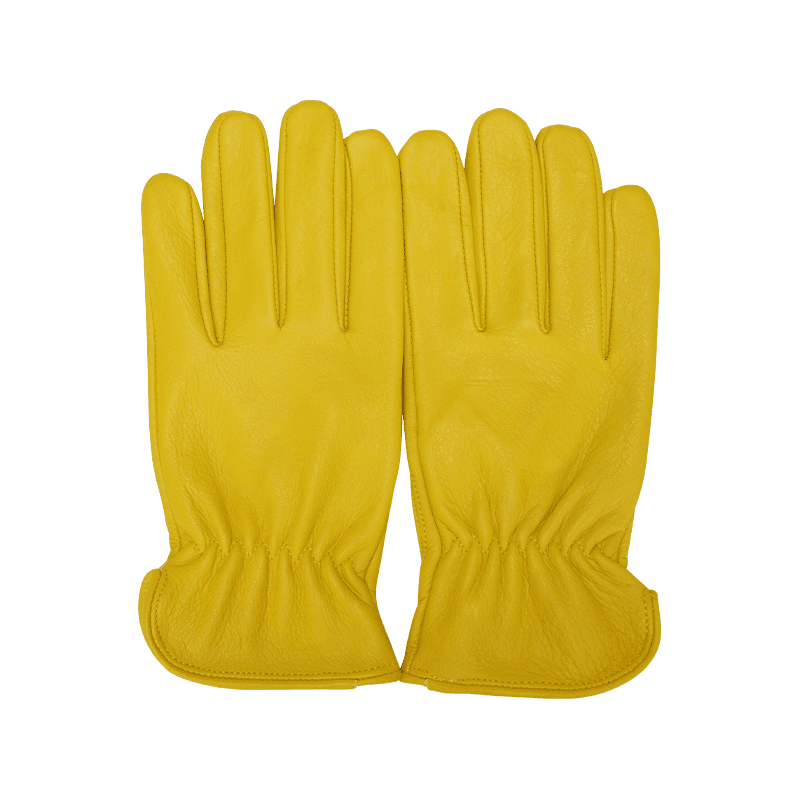
Если вы заинтересованы в нашей продукции, пожалуйста, проконсультируйтесь с нами
 +86-0513-68163373